The Village
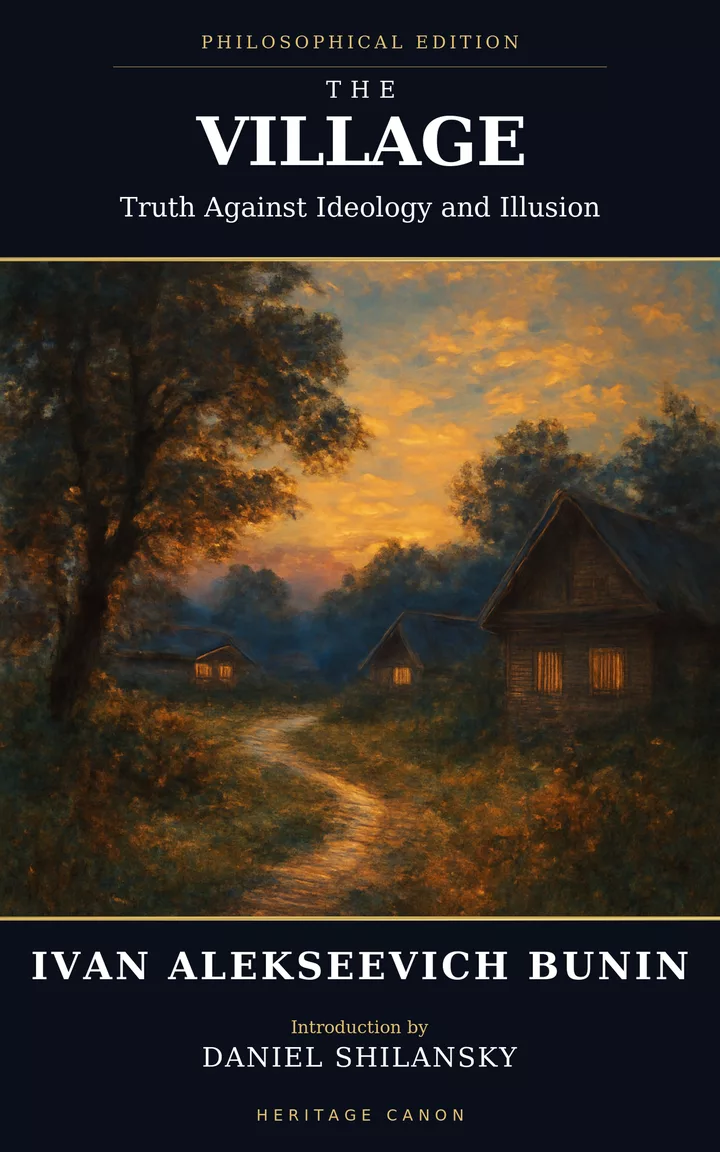
Cover of The Village

Philosophical edition

The Village

Truth Against Ideology and Illusion

Ivan Alekseevich Bunin

Introduction by

Daniel Shilansky

Available formats

Kindle

Original publication

1910

Genre

Novel

The argument

What this edition argues

A village elder faces a choice: cling to comforting myths about his community or confront the brutal truth staring him in the face. This dilemma unlocks a fierce philosophical battle—between seeing society as a symbol of moral virtue and acknowledging its messy, contradictory reality.

Ivan Alekseevich Bunin’s The Village exposes how easy it is to distort truth with comforting narratives, risking moral blindness. It’s a confrontation with the dangerous allure of idealization, demanding that we see human life for what it truly is—unfiltered and complex.

This isn’t just a story; it’s a challenge to stare down the illusions we cling to and accept the unsettling weight of reality.

FAQ

About this edition

What makes this edition different from a standard reprint?

It is not just a reprint of the text. It pairs the complete original work with a new philosophical introduction that reconstructs the conflicts, assumptions, and historical pressures that shaped why the book was written and how it was originally understood.

What does the introduction argue about this book?

It argues that Bunin's meticulous, non-ideological observation challenges traditional Russian literary representations of peasant life, emphasizing the limitations inherent in viewing the village through symbolic or ideological lenses.

Who is Daniel Shilansky, and what is his role in this edition?

Daniel Shilansky is the editor of Heritage Canon and the author of this edition’s introduction in the Philosophical Editions series. His work focuses on how literature and film participate in philosophical argument, and he writes for both general and academic readers.

Do I need to read the introduction before the novel?

No. You can read it first (if you do not mind plot spoilers) or return to it after the novel; the edition is designed to work either way.

Is the introduction academic or written for general readers?

It is intellectually serious but written for general readers, not only for specialists.

Is this text complete and unabridged?

Yes. The literary text is presented complete and unabridged.

Why does this edition use the label “Philosophical Edition”?

Because the introduction treats the book not just as a plot to summarize or a historical artifact to place, but as an intervention in larger questions of selfhood, morality, religion, desire, freedom, politics, and the shape of modern life.

Continue browsing

More in the catalog