
The Wendigo
The Loss of Self and the Call of the Inhuman
ebookpaperbackhardcover
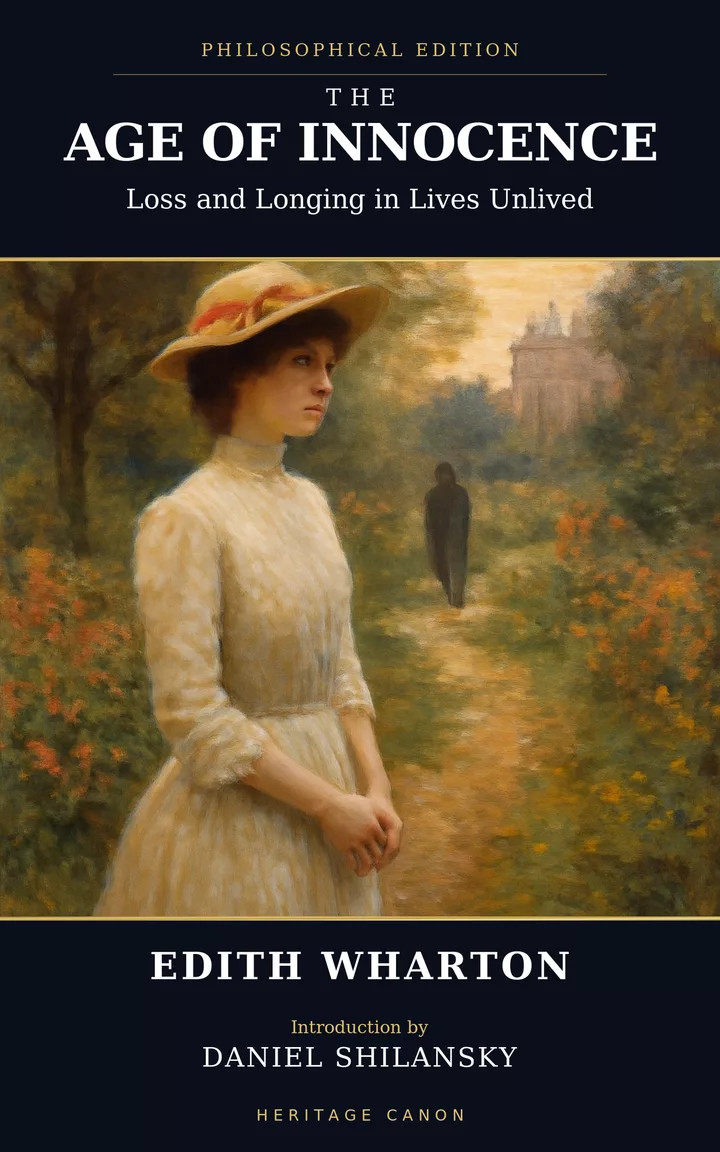
Philosophical edition
Loss and Longing in Lives Unlived
Introduction by
Daniel Shilansky
Available formats
Paperback
Original publication
1920
Genre
Novel
The argument
A man sits outside Ellen Olenska’s Paris apartment, knowing he can’t cross the threshold because the Passage of a lifetime has already shaped his Self into something that cannot undo what was done. Edith Wharton’s The Age of Innocence exposes Loss as the cost of clinging to inherited forms, and Longing as the ache for a Self that can never fully be restored.
The novel reveals how society’s rituals aren’t mere tradition but dangerous tools that mask the true costs of their preservation—costs paid by those who pay with their lives, their freedom, their very ability to act. In a world where political figures like Putin exploit the myth of moral continuity—weaponizing Loss to justify brutality—Wharton’s story warns that the deepest danger lies in mistaking what is lost for what was never truly ours to keep.
FAQ
Continue browsing