O Pioneers!
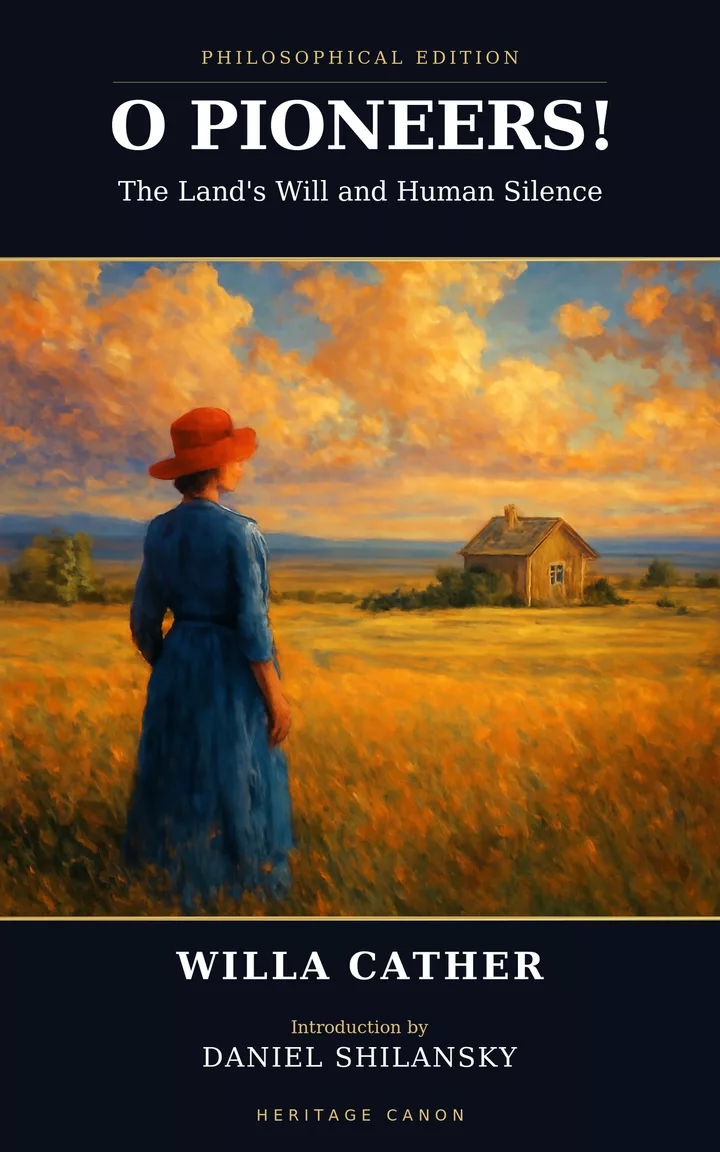
Cover of O Pioneers!

Philosophical edition

O Pioneers!

The Land's Will and Human Silence

Willa Cather

Introduction by

Daniel Shilansky

Available formats

Kindle

Original publication

1913

Genre

Novel

The argument

What this edition argues

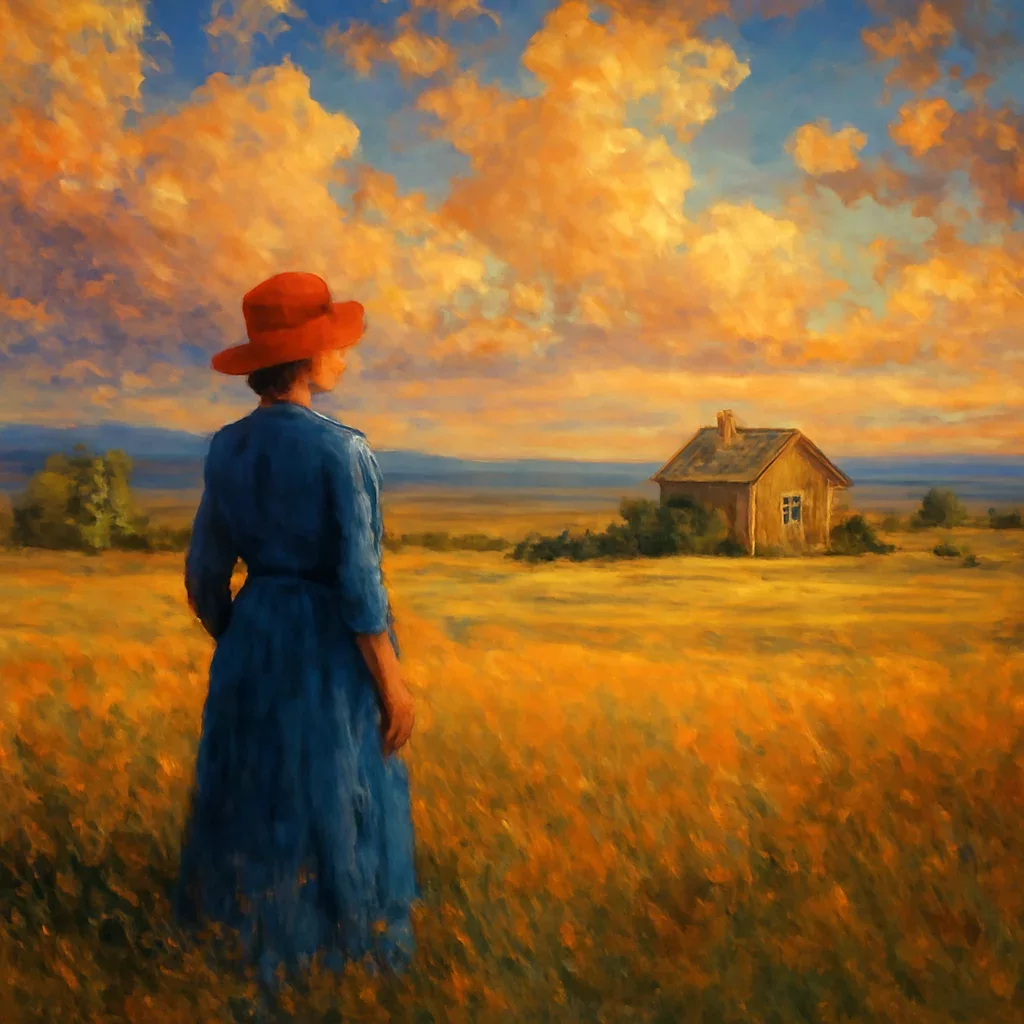
In O Pioneers! , Alexandra Bergson stands before the Nebraska prairie, her mind attuned to its quiet resistance and subtle demands, caught between the false promise of mastery and the illusion of submission. Her dilemma echoes today’s obsession with conquering nature, as political figures and corporations exploit Land's myth — a belief that the land is raw material waiting to be transformed — fueling environmental destruction and social disconnection.

Yet, the novel exposes how this faith in control is a dangerous lie, rooted in a deeper human silence that refuses to listen to the land’s own voice. Cather’s story reveals that true knowledge demands a willingness to surrender to something larger — an unsettling truth that the forces of progress and domination are two sides of the same broken coin.

O Pioneers! hits like a verdict: mastery is an illusion; silence is the price of understanding.

FAQ

About this edition

What makes this edition different from a standard reprint?

It is not just a reprint of the text. It pairs the complete original work with a new philosophical introduction that reconstructs the conflicts, assumptions, and historical pressures that shaped why the book was written and how it was originally understood.

What does the introduction argue about this book?

O Pioneers! intervenes in the conflict between two historically available accounts of knowledge — the voluntarist tradition, which treats knowing as instrumental transformation, and the receptive tradition, which treats it as passive spiritual openness — by dramatizing a third possibility that neither framework adequately theorizes.

Who is Daniel Shilansky, and what is his role in this edition?

Daniel Shilansky is the editor of Heritage Canon and the author of this edition’s introduction in the Philosophical Editions series. His work focuses on how literature and film participate in philosophical argument, and he writes for both general and academic readers.

Do I need to read the introduction before the novel?

No. You can read it first (if you do not mind plot spoilers) or return to it after the novel; the edition is designed to work either way.

Is the introduction academic or written for general readers?

It is intellectually serious but written for general readers, not only for specialists.

Is this text complete and unabridged?

Yes. The literary text is presented complete and unabridged.

Why does this edition use the label “Philosophical Edition”?

Because the introduction treats the book not just as a plot to summarize or a historical artifact to place, but as an intervention in larger questions of selfhood, morality, religion, desire, freedom, politics, and the shape of modern life.

Continue browsing

More in the catalog