
Death in Venice
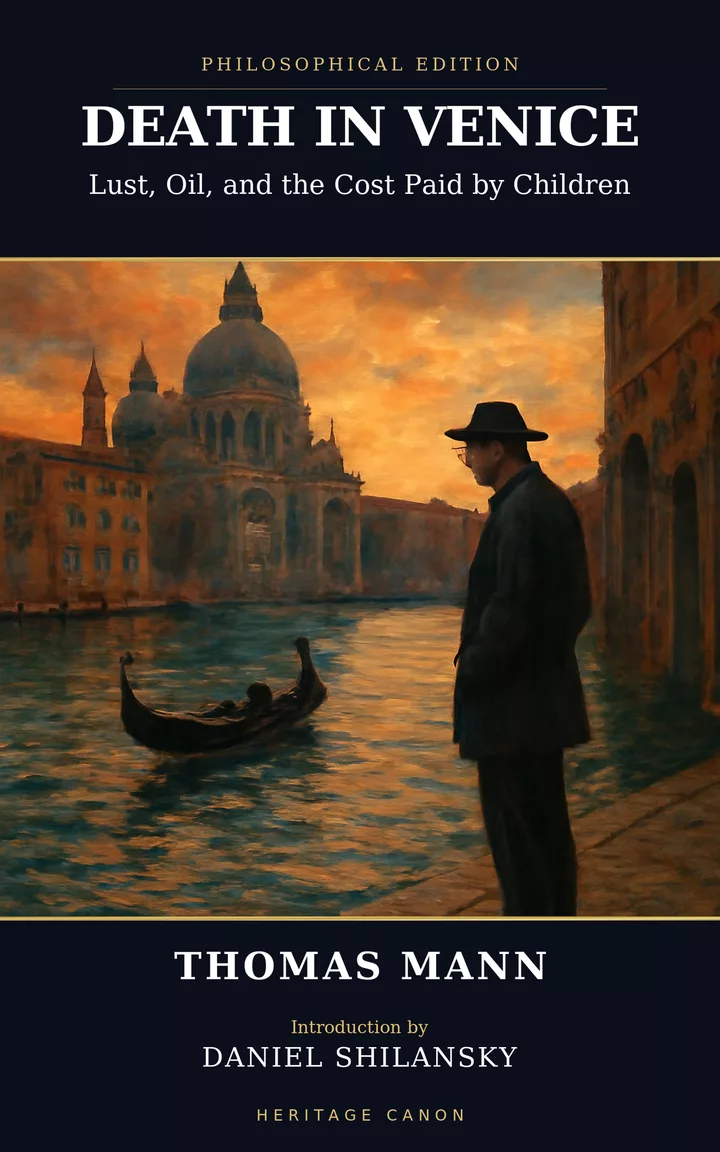
Cover of Death in Venice

Philosophical edition

Death in Venice

Lust, Oil, and the Cost Paid by Children

Thomas Mann

Introduction by

Daniel Shilansky

Available formats

Kindle, Paperback, Hardcover

Original publication

1912

Genre

Novella

Related essays

The argument

What this edition argues

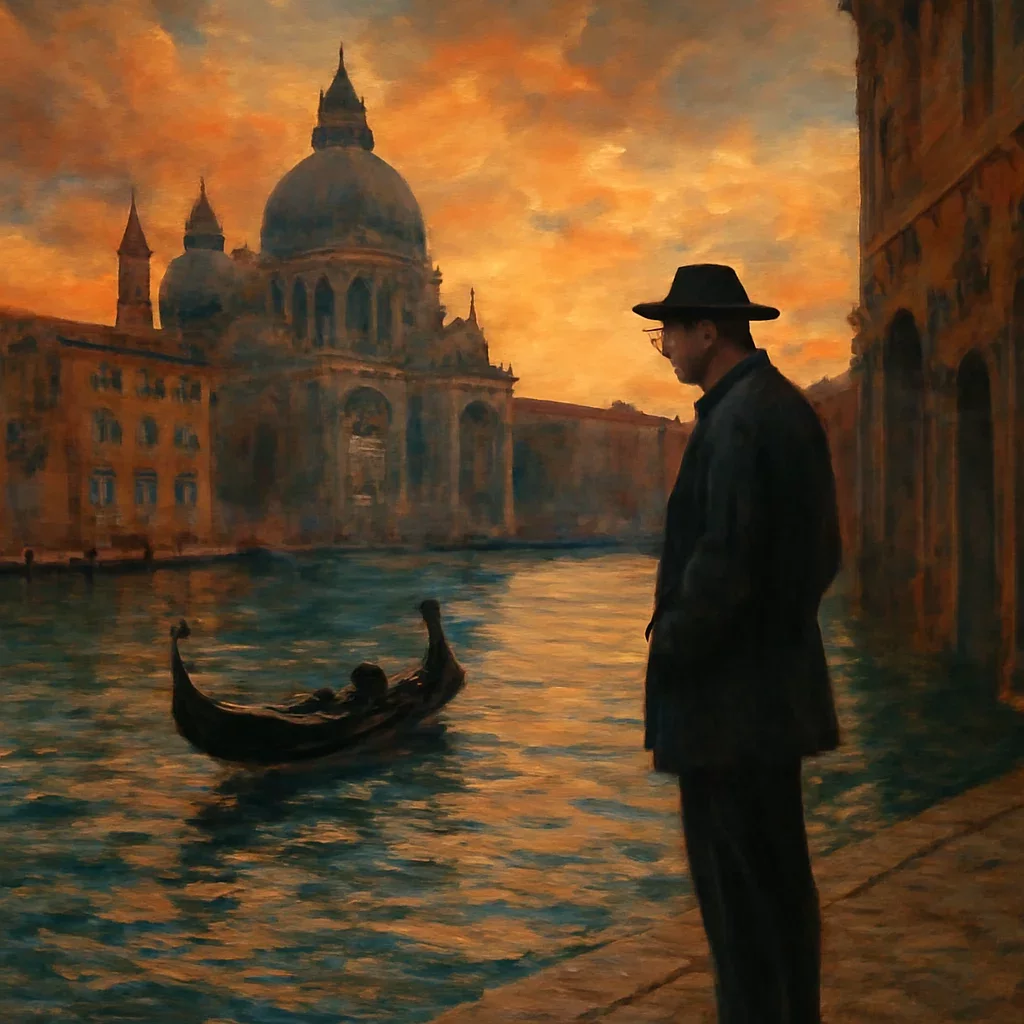
Thomas Mann’s Death in Venice plunges us into the mind of Gustav von Aschenbach, a revered artist whose pursuit of perfection collides with the intoxicating allure of Venice. As Aschenbach grapples with an impossible choice between rigid ideals and seductive chaos, Mann masterfully exposes the fragile veneer of civilization, revealing how reason can mask a primal hunger threatening to consume everything.

This is a profound exploration of the cost of desire, and the terrifying truth that human excellence may be a thin shield over an abyss. In this Heritage Canon Philosophical Edition, Daniel Shilansky’s introduction, Lust, Oil, and the Cost Paid by Children, illuminates the enduring relevance of Mann’s masterpiece.

Shilansky unpacks how Aschenbach’s descent offers a chilling diagnosis of our own era, where the pursuit of beauty and order can ignite destructive forces beyond control. This edition challenges us to confront the darkness within, making Death in Venice not merely a story, but a reckoning for our times.

FAQ

About this edition

What makes this edition different from a standard reprint?

It is not just a reprint of the text. It pairs the complete original work with a new philosophical introduction that reconstructs the conflicts, assumptions, and historical pressures that shaped why the book was written and how it was originally understood.

What does the introduction argue about this book?

The novella demonstrates that the pursuit of aesthetic and moral ideals, when taken to their logical extremes, inherently contains the seeds of self-destruction due to the structural interdependence of form and chaos.

Who is Daniel Shilansky, and what is his role in this edition?

Daniel Shilansky is the editor of Heritage Canon and the author of this edition’s introduction in the Philosophical Editions series. His work focuses on how literature and film participate in philosophical argument, and he writes for both general and academic readers.

Do I need to read the introduction before the novel?

No. You can read it first (if you do not mind plot spoilers) or return to it after the novel; the edition is designed to work either way.

Is the introduction academic or written for general readers?

It is intellectually serious but written for general readers, not only for specialists.

Is this text complete and unabridged?

Yes. The literary text is presented complete and unabridged.

Why does this edition use the label “Philosophical Edition”?

Because the introduction treats the book not just as a plot to summarize or a historical artifact to place, but as an intervention in larger questions of selfhood, morality, religion, desire, freedom, politics, and the shape of modern life.

Continue browsing

More in the catalog